
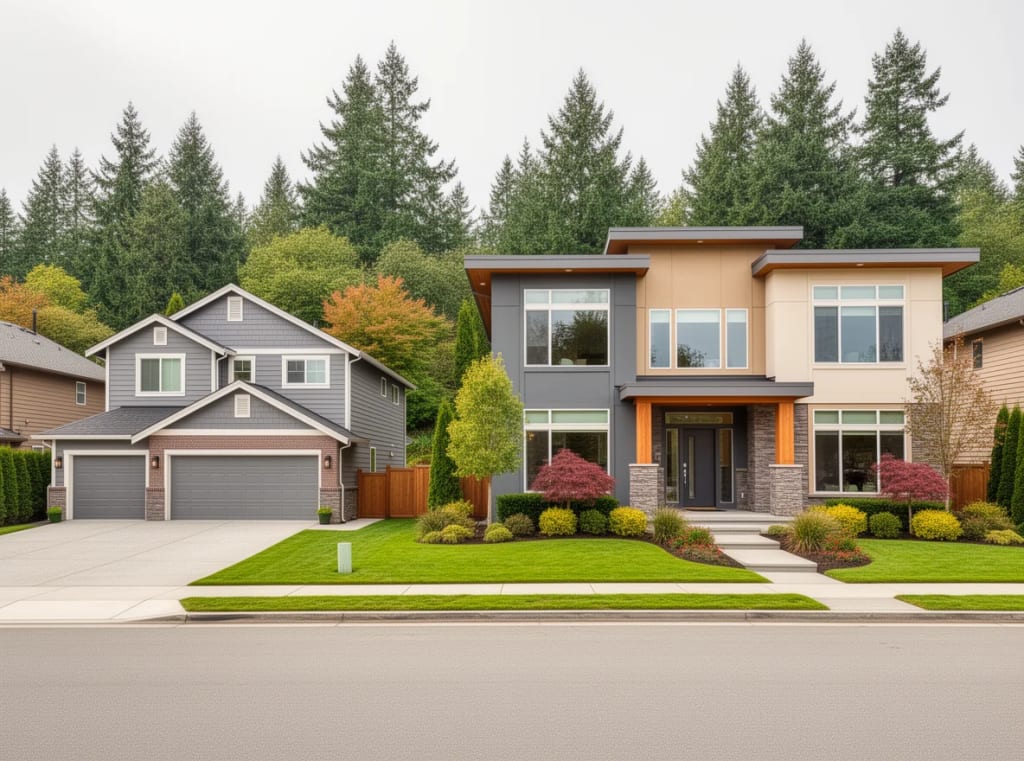
Condo or Single-Family in Bellevue? The "Monthly Payment" Is More Than Your Mortgage
It's easy to compare a condo and a single-family home in Bellevue by looking at list price, interest rate, and a quick mortgage calculator result. But after closing, most buyers discover a second layer of costs—some predictable, others "surprise!"—that can change how comfortable the payment feels month to month. The goal isn't to make the decision harder; it's to make it clearer. If you budget for the full picture up front, you can choose the home style that fits your lifestyle and your cash flow.
Below are nine common line items buyers forget when comparing Bellevue condos versus single-family homes, plus how each one tends to show up in real life. Think of this as a true-payment checklist you can keep beside your lender's estimate.

1) HOA dues (and what they don't cover)
Condo buyers usually remember HOA dues, but forget to verify what's included: water/sewer, trash, common-area electricity, building insurance, and amenities can vary widely. Two condos with similar dues can have very different "out-of-pocket" totals once you add utilities and insurance.
Single-family buyers may still have HOA dues in certain neighborhoods, but they're often lower and focused on community maintenance rather than building operations. The budgeting trick is to treat HOA dues like a fixed bill—then confirm which "hidden" bills you still pay yourself.
2) Special assessments and reserve health
Condos can come with a wildcard: special assessments for major repairs (roof, siding, elevator modernization, structural work). Even well-run communities face big-ticket maintenance eventually. A building with thin reserves can mean unexpected costs that don't show up in your mortgage payment.
For single-family homes, the "assessment" is essentially self-imposed: when the roof is done, it's on you. The difference is timing and control—condo owners may be asked to pay on the association's schedule, while homeowners choose when and how to tackle projects (within reason).
3) Insurance gaps: condo walls-in vs. full replacement
With condos, the HOA typically insures the exterior building and common elements, but your personal policy (often called "walls-in") may need to cover interior finishes, upgrades, personal property, and liability. The tricky part is matching coverage to the HOA master policy and your unit's finish level.
Single-family owners usually carry a broader homeowners policy covering the structure and property. Costs can be higher than a condo's walls-in policy, and the deductible you choose matters—especially in a region where windstorms and water intrusion can drive claims.
4) Property taxes that move after purchase
Buyers often budget for the tax amount shown online, but property taxes can adjust after a sale as assessments catch up. That change may not happen immediately, which can lead to escrow shortages later. Condos and single-family homes are both affected—the bigger factor is purchase price, assessment cycles, and local levy changes.
A practical step is to ask your lender to model a conservative tax number, not just last year's bill, and keep a buffer for escrow changes during the first year.
5) Utilities: shared systems vs. running the whole house
Condos sometimes include water, sewer, and garbage in dues, but not always. Some buildings have shared heating/cooling systems, while others meter each unit. The takeaway: don't assume "condo = lower utilities" without seeing the HOA budget and a recent utility summary.
Single-family homes often mean you're paying for everything—water, sewer, garbage, electricity, gas—and you're heating/cooling more square footage. Even if the monthly total is manageable, it's less predictable if the home has older windows, poor insulation, or a less efficient HVAC system.
6) Maintenance: the monthly "set-aside" most buyers skip

This is the quiet budget-buster, especially for first-time buyers moving from renting. Even with an HOA, condo owners should plan for in-unit maintenance: appliances, plumbing fixtures, water heater (if in-unit), flooring, and interior updates. HOAs cover shared components, not the wear-and-tear inside your front door.
For single-family homes, the maintenance list grows: roof, gutters, exterior paint, yard drainage, fence repair, tree trimming, and driveway upkeep. A common rule of thumb is setting aside 1% of the home's value annually, but the right number depends on age, materials, and whether prior owners deferred upkeep. In Bellevue's wet seasons, budgeting for moisture management—gutters, grading, crawlspace or basement monitoring—can save you from expensive surprises.
If you want a "true payment," add a monthly maintenance reserve line item. It may not go to a bill immediately, but it protects your future cash flow when a repair becomes urgent.
7) Parking, storage, and daily convenience fees
Many condos include one parking space, but extra spaces, secure storage lockers, or EV charging can be limited or fee-based. Some buildings also have move-in/move-out fees or require reserving elevators for moving. None of these costs are huge alone, but they stack into your real monthly number and your lifestyle satisfaction.
Single-family homes may avoid these fees, but you might trade them for driveway maintenance, added insurance for detached structures, or the cost of installing a Level 2 EV charger if you don't already have one.
8) Commute and lifestyle costs (the "time is money" category)
Buyers comparing condo vs. single-family often focus on square footage and forget the cost of convenience. A condo closer to employment hubs, parks, trails, and everyday errands can reduce transportation costs, paid parking, and the temptation of last-minute delivery fees. Meanwhile, a single-family home might offer more space and privacy, but come with longer drives or more reliance on a second car.
In Bellevue, where daily schedules can be full and traffic patterns matter, it's worth assigning a realistic monthly number to commuting, tolls, and parking—not just gas.
9) Financing differences: down payment, PMI, and interest-rate nuances

Condo financing can differ from single-family financing depending on building eligibility, owner-occupancy ratios, HOA financials, and the type of project approval needed. Sometimes that shows up as a slightly different rate, different down payment expectations, or extra lender review steps. If your down payment is smaller, PMI (or a similar monthly mortgage insurance cost) can materially change the monthly number—and it can be easier to overlook when you're focused on the list price.
Single-family loans can be more straightforward, but the bigger purchase price can increase the absolute dollar impact of small rate changes. The right approach is to compare scenarios using the same assumptions: interest rate, PMI, and cash-to-close—then overlay the non-mortgage costs you've captured in this checklist.
One helpful exercise is to create two "true payment" columns—condo and single-family—that include mortgage (P&I), taxes, insurance, HOA, utilities, and maintenance reserve. Seeing it in one place often makes the decision feel less emotional and more confident.
Putting it together: your Bellevue "true monthly payment" checklist
- Mortgage principal & interest (and any PMI)
- Property taxes (with a buffer for reassessment/escrow changes)
- Insurance (walls-in for condos; full coverage for single-family)
- HOA dues (plus any regular amenity/parking/storage fees)
- Utilities (verify what HOA includes vs. what you pay)
- Maintenance reserve (in-unit for condos; whole-property for single-family)
- Special assessment risk (condo reserves and upcoming projects)
- Commute/lifestyle costs (parking, tolls, second car needs)
If you're weighing a Bellevue condo against a single-family home, the best decision usually isn't "which is cheaper on paper," but "which stays comfortable after real-life expenses." Bay Tree Realty can help you compare specific buildings and neighborhoods, interpret HOA documents and reserve studies, and build a realistic monthly budget so the home you choose feels great long after move-in day.